

How it works
Know Before You Go.
Smart Movers Club gives you one briefing for any place in America — the numbers, the trends, and the local pros — before you move, invest, build, or start something there.
One briefing, every angle
Everything you need to understand a market

Housing
Home values, rents, affordability, and local market conditions.

Crime & Safety
Understand crime patterns and how different areas compare.

Cost of Living
See how far your income may actually go.

Economy & Jobs
Employment, income, business activity, and economic indicators.

Taxes & Government
State and local tax information, regulations, and public resources.

Population & Growth
See where people are moving, where populations are growing, and where markets may be changing.
Everything above, in one workspace
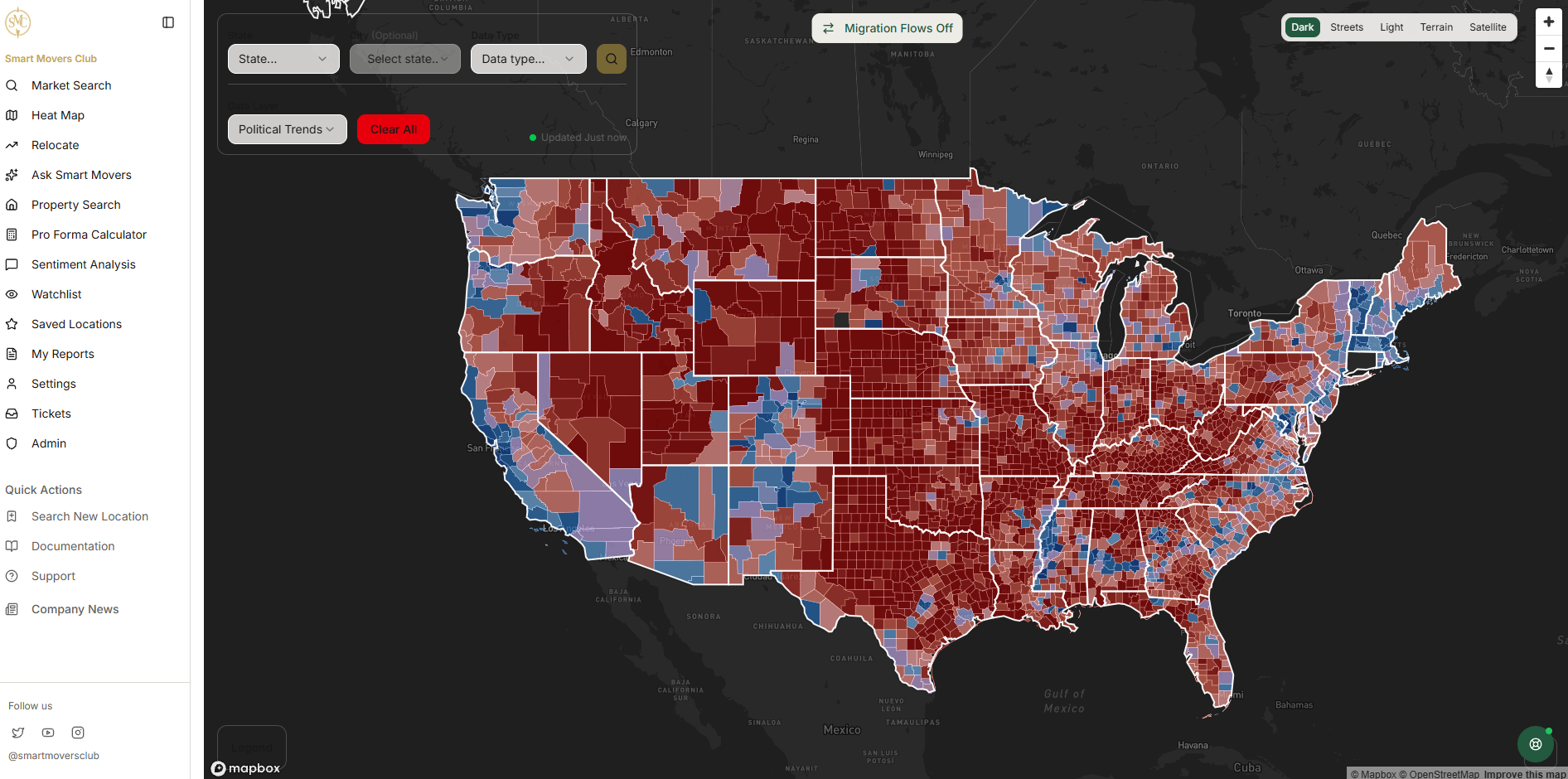
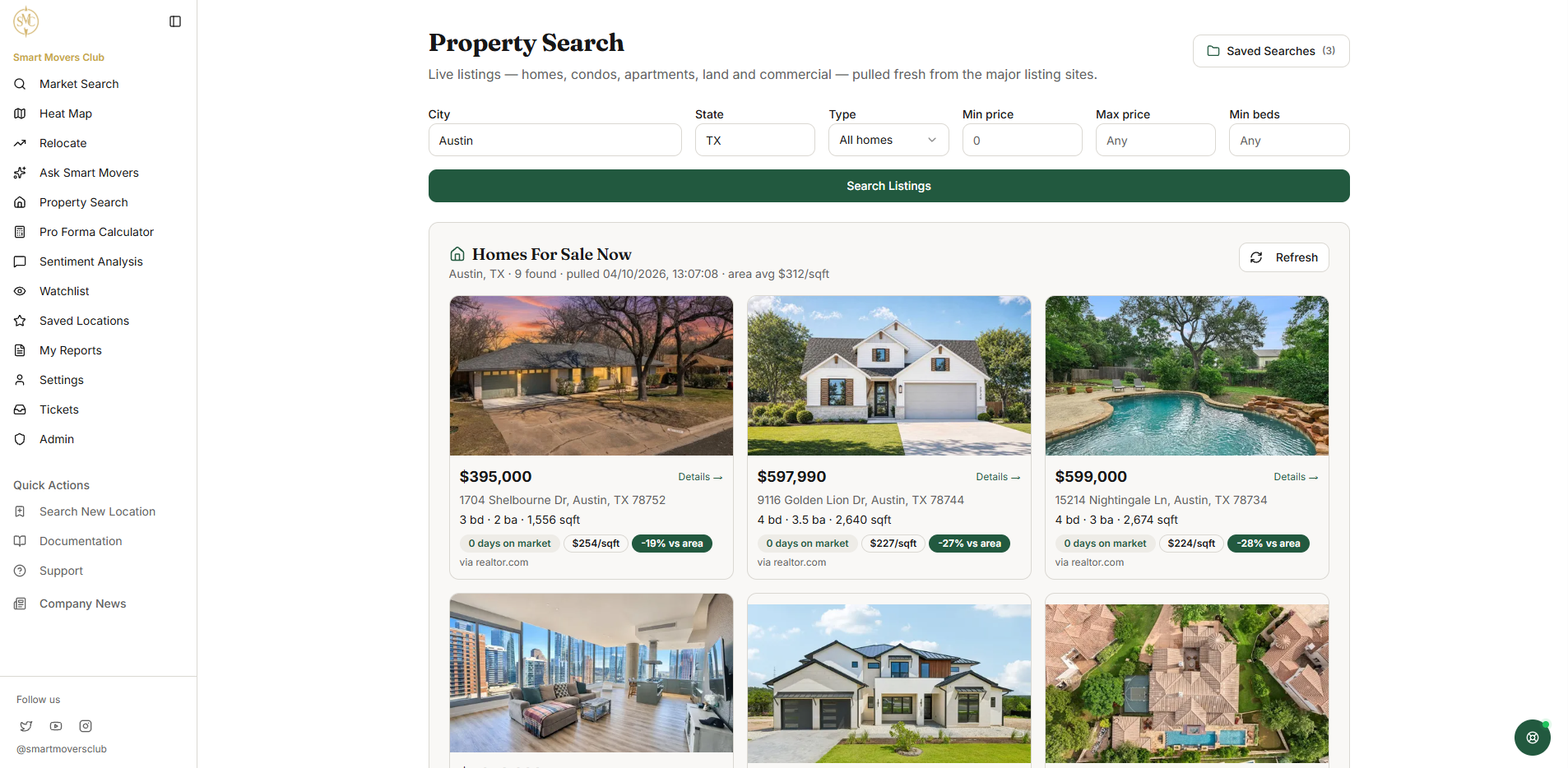
Search any place, run the heat map, see political, education, and religious stats, compare markets side by side, and pull current prices and live listings — the same screens your research runs on.
Side by side
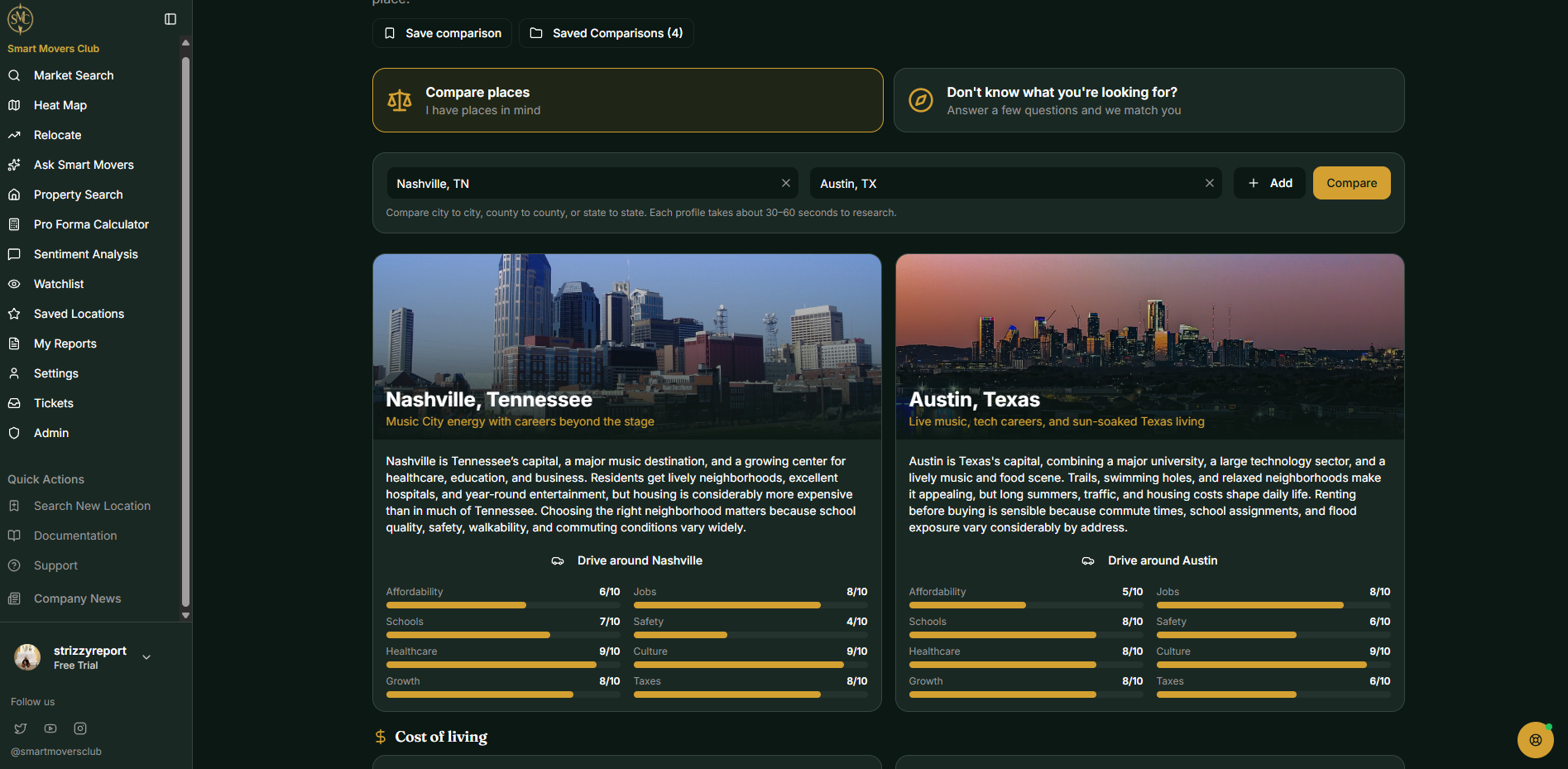
Don't research places one at a time. Compare them.
See political, education, and religious stats for any place — and compare them city to city with current prices — so you can see where your money, lifestyle, and goals fit better.
Who it's for
Built for people making real decisions
Pick one to see why the data matters, the mistakes that cost people the most, and how Smart Movers Club gets the right numbers.
A lease or a mortgage is the most expensive contract your family signs, and it's usually signed on the shortest timeline. The numbers that decide whether a move works — rent, safety, schools, taxes — are public. Most people just never look at them together.
- 01Judging a city by what it used to cost. Reputations lag prices by years. The market that was cheap when your friend moved is often a different market now.
- 02Comparing rent and ignoring the rest of the bill. Two places with the same rent can carry very different property taxes, insurance, utilities, and commute costs. The monthly total is what actually bites.
- 03Visiting once and deciding for a whole metro. Crime, schools, and home values shift block to block. One weekend in one neighborhood tells you almost nothing about where you'd actually live.
- 04Deciding before the timing is set. Where you move depends on when — a job start date, a school year, a lease end. Timing changes which markets are realistic.
One briefing for any city, county, or state: current home values and rents, crime, schools, cost of living, taxes, and where people are actually moving from and to. Set your window, compare two places side by side, and see the monthly picture before you sign anything.
Research a moveReturns are decided at purchase, not at exit. The demand that fills a property — in-migration, jobs, income growth — is measurable before you buy. It's also the part most buyers skip.
- 01Buying where the story is loudest. The market on every podcast is already priced for that story. Coverage is not upside.
- 02Chasing yield without checking who rents there. A cheap entry with no inflow of renters or buyers isn't a bargain — it's a vacancy waiting to happen.
- 03Using a city average for a property-level decision. Averages hide the gap between a strong block and a weak one in the same metro. Your property sits on one block.
- 04Never checking the exit. Who buys or rents from you in five years depends on population growth, supply, and job mix. All of it is visible now.
Compare markets side by side on migration, prices, rents, income, employment, and growth. Pull current listings and price per square foot, and see the political, education, and religious profile of the place your tenants or buyers will actually be.
Compare marketsLocation is the one expense you can't renegotiate. Revenue follows the people already there and the ones on their way in. Cost follows the tax and labor terms you sign. Both are knowable before you commit.
- 01Choosing a market you already know. Familiarity is not demand. The place that fits your life may have no customers for your business.
- 02Counting population without counting income or growth. A large market that isn't growing gives you competition today and less of it tomorrow.
- 03Skipping the tax and regulation check. State and local tax structure, licensing, and permitting move your margin — often more than rent does.
- 04Guessing at competition. How many similar businesses already operate in that market is a signal, and it's available.
Screen markets on population, income, employment, business activity, taxes, and cost of living in one place. Compare candidate markets directly, then find the local offices, services, and pros you'll need once you arrive.
Screen marketsRetirement is the first move where your income stops moving with the market. Fixed costs — taxes, insurance, healthcare, housing — become the entire decision, and they're the least visible ones up front.
- 01Moving for cheap homes, staying for the tax bill. A low price in a high-tax, high-insurance state can cost more per month than a pricier home somewhere else.
- 02Assuming healthcare access. Distance to specialists, hospital quality, and provider supply vary widely — and the gap widens every year you're there.
- 03Underestimating lifestyle fit. Community, climate, walkability, distance from family, and the social life of a place decide whether the move holds.
- 04Deciding on a vacation. Two weeks in peak season tells you nothing about winter traffic, summer bills, or an ordinary Tuesday.
Compare states and cities on taxes, home values, rents, cost of living, healthcare access, safety, and community stats — side by side, with current prices — so you see the monthly picture before you sell anything.
Compare places to retireLocal pros
When you're ready to move, know who to call.
Research is only part of the move. Smart Movers Club can also connect you with local professionals in the markets you're considering — real estate agents, movers, lenders, property managers, contractors, insurance professionals, and other local resources.